 Business License

Mining round link chain: the "steel backbone" of coal mining
In the roar of deep coal mines, scraper conveyors transport coal day and night like steel dragons. The "backbone" that drives this steel dragon is the high-strength circul
chain used in mining - a seemingly simple but extremely load-bearing core component. It is not only the traction power source of coal mining machinery, but also the key link to ensure modern coal mining efficiency and safety.
1、 What is the mining round link chain?
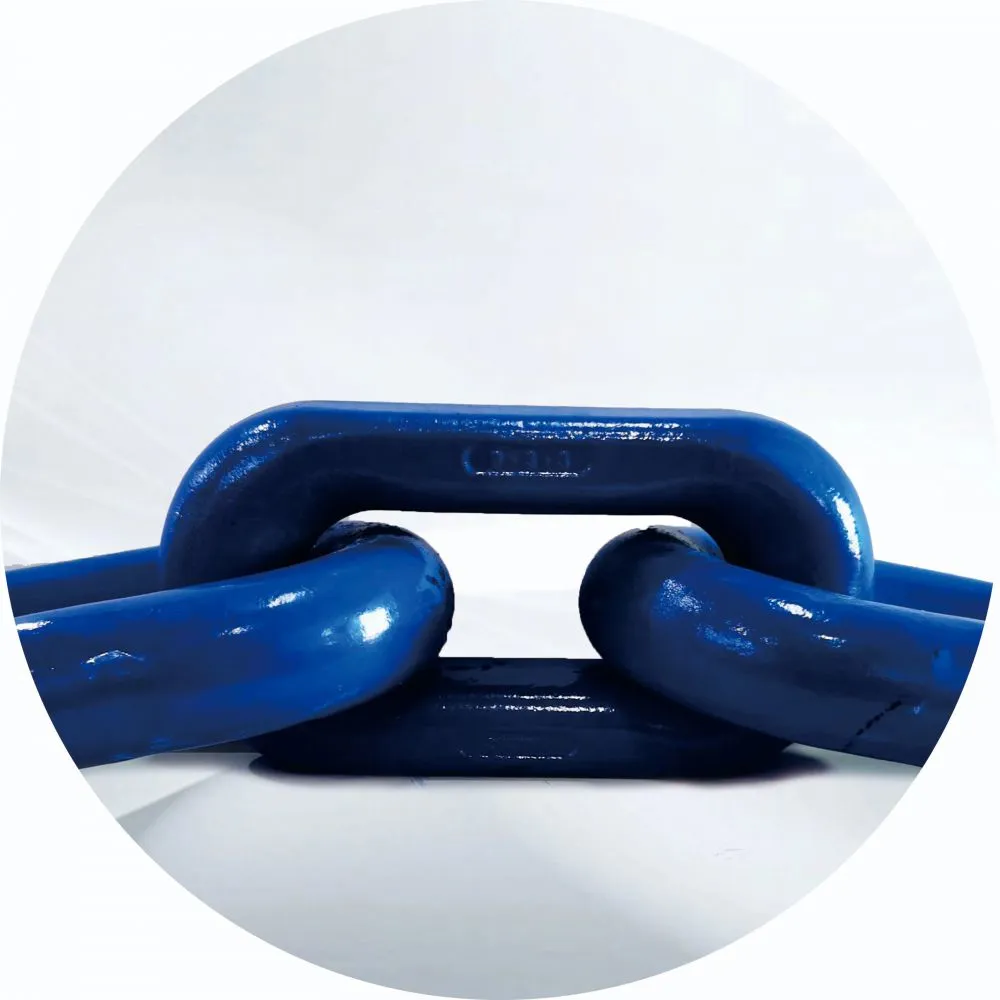
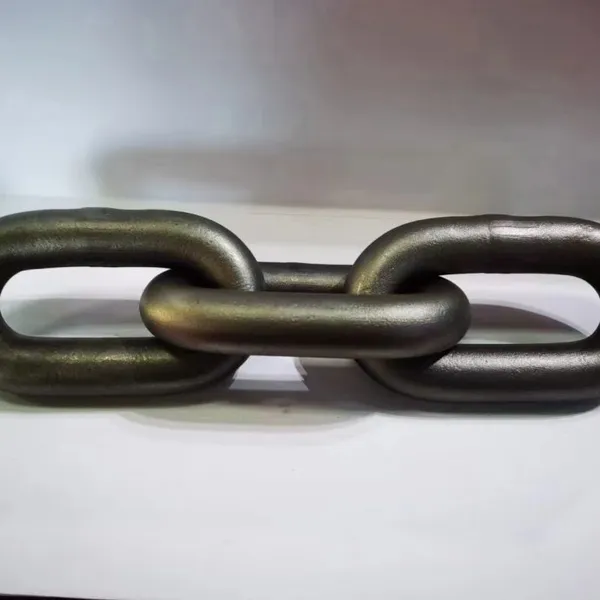
Mining round link chain is a traction component composed of nested metal chain links, mainly used in the transmission system of coal mine scraper conveyors, coal planers, drum coal mining machines and other equipment. Its core function is to transmit power to the scraper and drive it to drag coal or gangue in the chute, achieving continuous transportation.
Unlike ordinary chains, mining circular chains need to meet the "triple challenge" of extreme working conditions:
High load: bear the huge tensile stress generated by the friction between the scraper and the material;
Strong wear and tear: resistant to abrasive wear from coal and gravel;
Impact resistance: Dealing with instantaneous impacts caused by equipment start stop and material jamming
2、 Manufacturing process: Technology tempered "steel bars and iron bones"
A qualified high-strength circular chain requires eight precision processes:
Cutting → Cold bending braiding → Joint → Welding → Primary calibration → Heat treatment → Secondary calibration (pre tension) → Inspection
Welding and heat treatment are the core links that determine the lifespan of the chain
Welding: Precision butt welding technology is used, and the misalignment should be controlled within 3% of the chain ring diameter to ensure that the weld seam is free of defects such as cracks and slag inclusions;
Heat treatment: Medium frequency induction heating is commonly used for continuous quenching and tempering. Through electromagnetic fields, molecules move at high speed to generate heat, and the steel is heated to the target temperature within seconds, forming a high-strength low-carbon martensitic structure
This process endows the chain with four major performance advantages: wear resistance, corrosion resistance, high hardness, and deformation resistance.
3、 Technical characteristics and specification parameters
1. Performance requirements
According to the national standard GB/T 12718-2009, mining circular chains must meet the following requirements:
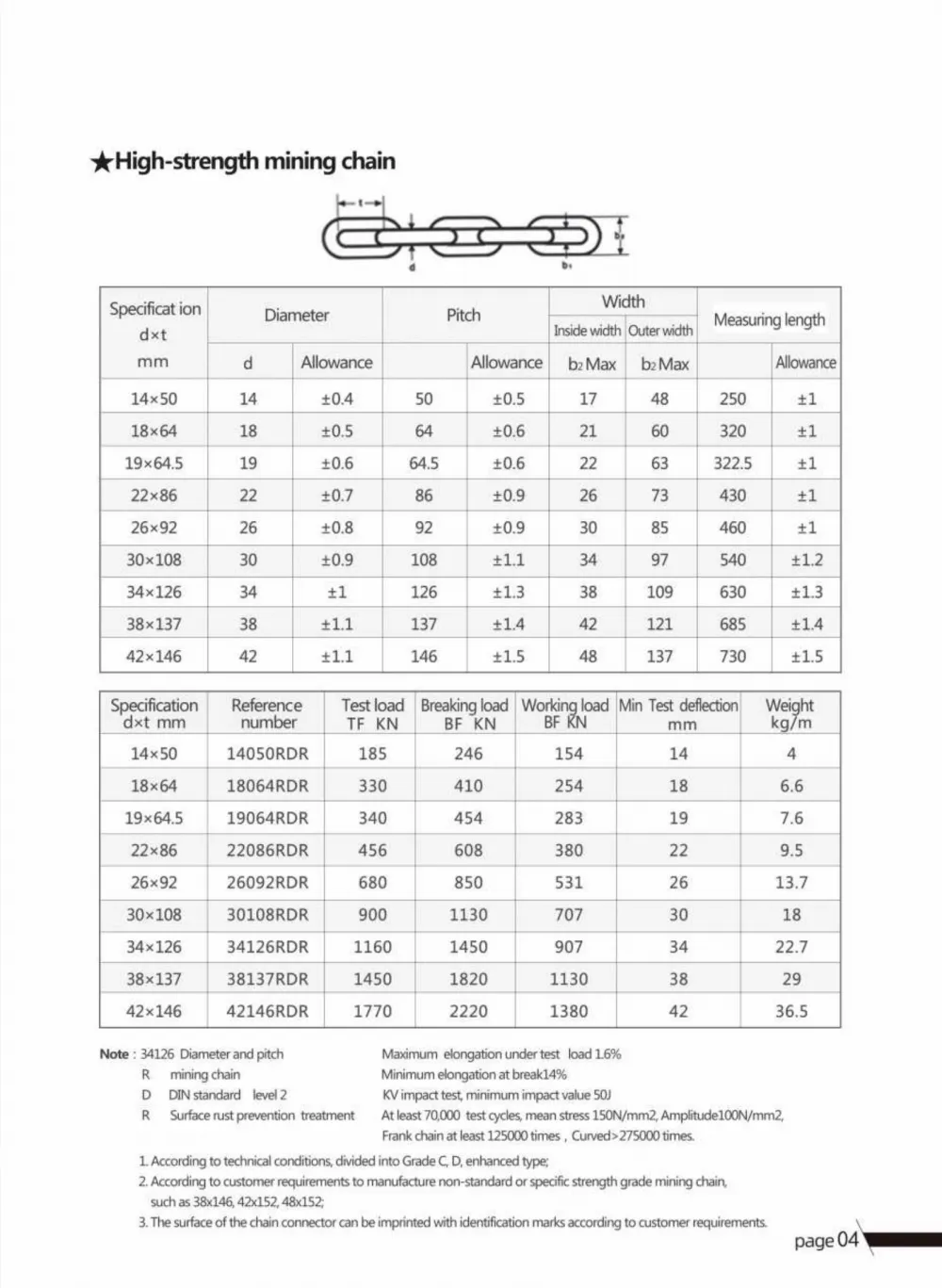
High breaking load: For example, the breaking load of a 26x92 specification C-class chain needs to reach 850kN (approximately 86 tons of force);
Elongation control: Elongation rate under test load ≤ 1.6%, to avoid excessive stretching of the chain leading to meshing failure;
Balance of strength and toughness: using alloy steels such as 20Mn2 and 25MnV, balancing strength and impact resistance
.
2. Mainstream specifications and application scenarios
Table: Typical Specification Parameters of Mining Circular Chain
|Specification (diameter x pitch) | Minimum breaking load (kN) | Applicable equipment type|
|-------------------|-------------------|-----------------------|
|18 × 64 (40T) | B-grade 320/C-grade 410 | SGB620/40T scraper conveyor|
|22 × 86 | B-level 480/C-level 610 | Large scale fully mechanized mining face conveyor|
|30 × 108 | B-class 890/C-Class 1130 | High power drum shearer|
|42 × 146 | C-class 2220 | Ultra heavy scraper loader
4、 Quality inspection: the lifeline of safe operation
The mining circular chain needs to pass four strict tests:
1. Static tensile test: Load to the breaking load and monitor the elongation rate
Whether it exceeds the standard;
2. Fatigue test: Load at a frequency of 500 cycles per minute to simulate long-term operating conditions;
3. Gap impact test: Test the toughness of the straight edge of the chain link to prevent brittle fracture;
4. Pre tension correction: Apply 90% test load after heat treatment to eliminate residual stress
5、 Industry Trend: Upgrading towards High Intensity and Intelligence
With the large-scale development of coal mining equipment, circular chain technology is breaking through in two directions:
Material Upgrade: Develop alloy steels with higher strength and toughness (such as 25MnV) to increase the proportion of C-grade chains;
Technological innovation: Laser welding and intelligent temperature control heat treatment are gradually popularized to reduce human errors
Internationalization of standards: Produce export chains according to DIN (German standards) and BS (British standards), and participate in global competition
conclusion
Although the mining circular chain is hidden inside the machinery, it is the "invisible pillar" of the coal mining system. From a piece of alloy steel to a chain capable of carrying thousands of tons of force, there is a deep integration of materials science, thermodynamics, and precision manufacturing behind it. As China's coal mining equipment moves towards high-end, this "steel backbone" will surely support the important task of energy security with a more resilient posture.
Technical standard: The current national standard GB/T 12718-2009 is applicable to coal mine traction equipment and does not include lifting chains